Morrison And Boyd Organic Chemistry 6th Edition Pdf Free Download
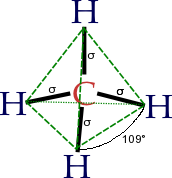
Marsh gas, CH4; the line-angle structural formula shows four carbon-hydrogen single bonds (σ, in blackness), and the typical 3D shape of tetrahedral molecules, with ~109° interior bond angles (in dashed-green).
Organic chemistry is a co-operative of chemistry that studies the construction, properties and reactions of organic compounds, which contain carbon-carbon covalent bonds.[1] Written report of construction determines their structural formula. Study of backdrop includes physical and chemical properties, and evaluation of chemical reactivity to understand their behavior. The study of organic reactions includes the chemic synthesis of natural products, drugs, and polymers, and written report of individual organic molecules in the laboratory and via theoretical (in silico) study.
The range of chemicals studied in organic chemistry includes hydrocarbons (compounds containing only carbon and hydrogen) as well equally compounds based on carbon, but also containing other elements,[one] [2] [iii] specially oxygen, nitrogen, sulfur, phosphorus (included in many biochemicals) and the halogens. Organometallic chemical science is the study of compounds containing carbon–metal bonds.
In addition, contemporary inquiry focuses on organic chemical science involving other organometallics including the lanthanides, but especially the transition metals zinc, copper, palladium, nickel, cobalt, titanium and chromium.

Line-angle representation
Ball-and-stick representation

Space-filling representation
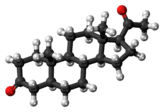
Three representations of an organic compound, 5α-Dihydroprogesterone (5α-DHP), a steroid hormone. For molecules showing color, the carbon atoms are in black, hydrogens in gray, and oxygens in cerise. In the line angle representation, carbon atoms are implied at every terminus of a line and vertex of multiple lines, and hydrogen atoms are implied to fill the remaining needed valences (upward to 4).
Organic compounds form the basis of all earthly life and found the majority of known chemicals. The bonding patterns of carbon, with its valence of four—formal unmarried, double, and triple bonds, plus structures with delocalized electrons—make the array of organic compounds structurally diverse, and their range of applications enormous. They form the ground of, or are constituents of, many commercial products including pharmaceuticals; petrochemicals and agrichemicals, and products fabricated from them including lubricants, solvents; plastics; fuels and explosives. The study of organic chemistry overlaps organometallic chemistry and biochemistry, only as well with medicinal chemistry, polymer chemical science, and materials science.[1]
History [edit]
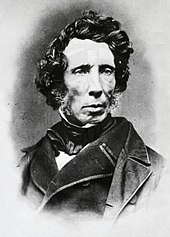
Earlier the 18th century, chemists by and large believed that compounds obtained from living organisms were endowed with a vital force that distinguished them from inorganic compounds. Co-ordinate to the concept of vitalism (vital strength theory), organic matter was endowed with a "vital forcefulness".[4] During the commencement half of the nineteenth century, some of the first systematic studies of organic compounds were reported. Around 1816 Michel Chevreul started a study of soaps made from various fats and alkalis. He separated the acids that, in combination with the alkali, produced the soap. Since these were all private compounds, he demonstrated that it was possible to make a chemical change in diverse fats (which traditionally come from organic sources), producing new compounds, without "vital forcefulness". In 1828 Friedrich Wöhler produced the organic chemic urea (carbamide), a elective of urine, from inorganic starting materials (the salts potassium cyanate and ammonium sulfate), in what is now called the Wöhler synthesis. Although Wöhler himself was cautious about claiming he had disproved vitalism, this was the commencement time a substance thought to be organic was synthesized in the laboratory without biological (organic) starting materials. The event is now by and large accepted as indeed disproving the doctrine of vitalism.[5]
In 1856 William Henry Perkin, while trying to manufacture quinine accidentally produced the organic dye now known every bit Perkin's mauve. His discovery, fabricated widely known through its fiscal success, greatly increased interest in organic chemistry.[6]
A crucial quantum for organic chemistry was the concept of chemic structure, adult independently in 1858 by both Friedrich August Kekulé and Archibald Scott Couper.[vii] Both researchers suggested that tetravalent carbon atoms could link to each other to class a carbon lattice, and that the detailed patterns of atomic bonding could be discerned by skilful interpretations of appropriate chemical reactions.[8]
The era of the pharmaceutical manufacture began in the last decade of the 19th century when the manufacturing of acetylsalicylic acid—more commonly referred to as aspirin—in Germany was started by Bayer.[9] By 1910 Paul Ehrlich and his laboratory grouping began developing arsenic-based arsphenamine, (Salvarsan), as the first effective medicinal treatment of syphilis, and thereby initiated the medical practise of chemotherapy. Ehrlich popularized the concepts of "magic bullet" drugs and of systematically improving drug therapies.[10] [11] His laboratory fabricated decisive contributions to developing antiserum for diphtheria and standardizing therapeutic serums.[12]

An example of an organometallic molecule, a catalyst called Grubbs' catalyst. Its formula is oftentimes given as RuCl2(PCythree)2(=CHPh), where the ball-and-stick model is based on X-ray crystallography.[xiii] The single metallic atom ruthenium (Ru), (in turquoise), is at the very center of the structure; two chlorines (dark-green), are bonded to the ruthenium atom—carbon atoms are black, hydrogens gray-white, and phosphorus orangish. A phosphorus-ligand bail, tricyclohexyl phosphine, PCy, is beneath center; (another PCy ligand appears at the top of the image where its rings are obscuring one another). The ring group projecting to the right, an alkylidene, contains a metallic-carbon double bond to ruthenium.
Early on examples of organic reactions and applications were often plant because of a combination of luck and preparation for unexpected observations. The latter half of the 19th century withal witnessed systematic studies of organic compounds. The development of constructed indigo is illustrative. The production of indigo from plant sources dropped from 19,000 tons in 1897 to ane,000 tons by 1914 thank you to the synthetic methods adult past Adolf von Baeyer. In 2002, 17,000 tons of synthetic indigo were produced from petrochemicals.[fourteen]
In the early part of the 20th century, polymers and enzymes were shown to exist large organic molecules, and petroleum was shown to be of biological origin.
The multiple-step synthesis of complex organic compounds is called total synthesis. Total synthesis of complex natural compounds increased in complexity to glucose and terpineol. For case, cholesterol-related compounds have opened ways to synthesize complex human hormones and their modified derivatives. Since the start of the 20th century, complication of total syntheses has been increased to include molecules of loftier complexity such as lysergic acid and vitamin B12.[15]

The total synthesis of vitamin B12 marked a major achievement in organic chemistry.
The discovery of petroleum and the development of the petrochemical industry spurred the development of organic chemical science. Converting individual petroleum compounds into types of compounds by diverse chemical processes led to organic reactions enabling a broad range of industrial and commercial products including, among (many) others: plastics, synthetic rubber, organic adhesives, and diverse property-modifying petroleum additives and catalysts.
The majority of chemical compounds occurring in biological organisms are carbon compounds, and then the association betwixt organic chemistry and biochemistry is so close that biochemistry might be regarded as in essence a co-operative of organic chemistry. Although the history of biochemistry might be taken to span some 4 centuries, cardinal understanding of the field but began to develop in the late 19th century and the actual term biochemistry was coined around the first of 20th century. Research in the field increased throughout the twentieth century, without any indication of slackening in the rate of increment, as may be verified by inspection of abstraction and indexing services such every bit BIOSIS Previews and Biological Abstracts, which began in the 1920s as a unmarried almanac volume, but has grown and so drastically that by the end of the 20th century information technology was only available to the everyday user every bit an online electronic database.[16]
Characterization [edit]
Since organic compounds frequently exist as mixtures, a variety of techniques have as well been developed to assess purity; chromatography techniques are particularly important for this awarding, and include HPLC and gas chromatography. Traditional methods of separation include distillation, crystallization, evaporation, magnetic separation and solvent extraction.
Organic compounds were traditionally characterized by a variety of chemical tests, called "wet methods", but such tests take been largely displaced by spectroscopic or other computer-intensive methods of analysis.[17] Listed in approximate social club of utility, the chief analytical methods are:
- Nuclear magnetic resonance (NMR) spectroscopy is the most commonly used technique, often permitting the complete assignment of atom connectivity and even stereochemistry using correlation spectroscopy. The main constituent atoms of organic chemical science – hydrogen and carbon – exist naturally with NMR-responsive isotopes, respectively 1H and 13C.
- Elemental analysis: A destructive method used to determine the elemental composition of a molecule. Meet too mass spectrometry, beneath.
- Mass spectrometry indicates the molecular weight of a compound and, from the fragmentation patterns, its structure. High-resolution mass spectrometry can usually identify the exact formula of a chemical compound and is used in place of elemental analysis. In former times, mass spectrometry was restricted to neutral molecules exhibiting some volatility, but advanced ionization techniques permit one to obtain the "mass spec" of nigh any organic compound.
- Crystallography tin can exist useful for determining molecular geometry when a single crystal of the material is bachelor. Highly efficient hardware and software allows a structure to exist determined inside hours of obtaining a suitable crystal.
Traditional spectroscopic methods such as infrared spectroscopy, optical rotation, and UV/VIS spectroscopy provide relatively nonspecific structural information but remain in utilise for specific applications. Refractive alphabetize and density can as well be of import for substance identification.
Properties [edit]
The physical properties of organic compounds typically of interest include both quantitative and qualitative features. Quantitative information includes a melting point, boiling point, and index of refraction. Qualitative backdrop include odor, consistency, solubility, and color.
Melting and humid properties [edit]
Organic compounds typically melt and many boil. In dissimilarity, while inorganic materials by and large tin be melted, many exercise not boil, and instead tend to degrade. In earlier times, the melting point (g.p.) and humid point (b.p.) provided crucial data on the purity and identity of organic compounds. The melting and boiling points correlate with the polarity of the molecules and their molecular weight. Some organic compounds, specially symmetrical ones, sublime. A well-known example of a sublimable organic compound is para-dichlorobenzene, the odiferous constituent of modern mothballs. Organic compounds are usually not very stable at temperatures above 300 °C, although some exceptions exist.
Solubility [edit]
Neutral organic compounds tend to be hydrophobic; that is, they are less soluble in water than in organic solvents. Exceptions include organic compounds that contain ionizable groups as well as depression molecular weight alcohols, amines, and carboxylic acids where hydrogen bonding occurs. Otherwise, organic compounds tend to dissolve in organic solvents. Solubility varies widely with the organic solute and with the organic solvent.
Solid state backdrop [edit]
Diverse specialized backdrop of molecular crystals and organic polymers with conjugated systems are of interest depending on applications, eastward.g. thermo-mechanical and electro-mechanical such as piezoelectricity, conductivity (see conductive polymers and organic semiconductors), and electro-optical (e.g. non-linear optics) properties. For historical reasons, such properties are mainly the subjects of the areas of polymer science and materials science.
Classification [edit]

Various names and depictions for one organic compound.
The names of organic compounds are either systematic, post-obit logically from a gear up of rules, or nonsystematic, following various traditions. Systematic nomenclature is stipulated past specifications from IUPAC. Systematic classification starts with the name for a parent structure within the molecule of interest. This parent proper name is then modified past prefixes, suffixes, and numbers to unambiguously convey the structure. Given that millions of organic compounds are known, rigorous use of systematic names tin be cumbersome. Thus, IUPAC recommendations are more closely followed for simple compounds, but not complex molecules. To employ the systematic naming, one must know the structures and names of the parent structures. Parent structures include unsubstituted hydrocarbons, heterocycles, and mono functionalized derivatives thereof.
Nonsystematic nomenclature is simpler and unambiguous, at least to organic chemists. Nonsystematic names exercise not bespeak the structure of the compound. They are mutual for complex molecules, which include nigh natural products. Thus, the informally named lysergic acid diethylamide is systematically named (6aR,ixR)-N,N-diethyl-vii-methyl-4,half dozen,6a,seven,viii,nine-hexahydroindolo-[4,3-fg] quinoline-9-carboxamide.
With the increased use of computing, other naming methods take evolved that are intended to be interpreted by machines. Two popular formats are SMILES and InChI.
Structural drawings [edit]
Organic molecules are described more commonly by drawings or structural formulas, combinations of drawings and chemic symbols. The line-angle formula is simple and unambiguous. In this organization, the endpoints and intersections of each line represent one carbon, and hydrogen atoms tin either exist notated explicitly or causeless to exist nowadays as unsaid by tetravalent carbon.

This diagram shows five distinct structural representations of the organic compound butane. The left-most structure is a bond-line drawing where the hydrogen atoms are removed. The 2nd structure has the hydrogens added depicted-the dark wedged bonds indicate the hydrogen atoms are coming toward the reader, the hashed bonds indicate the atoms are oriented away from the reader, and the solid (plain) bonds bespeak the bonds are in the plane of the screen/paper. The middle structure shows the 4 carbon atoms. The 4th structure is a representation but showing the atoms and bonds without 3-dimensions. The right-nigh structure is a condensed construction representation of butane.
History [edit]
Past 1880 an explosion in the number of chemical compounds existence discovered occurred assisted past new synthetic and analytical techniques. Grignard described the situation equally "anarchy le plus complet" (complete chaos) due to the lack of convention it was possible to have multiple names for the same chemical compound. This led to the creation of the Geneva rules in 1892.[18]
Nomenclature of organic compounds [edit]
Functional groups [edit]

The concept of functional groups is key in organic chemistry, both as a means to classify structures and for predicting backdrop. A functional grouping is a molecular module, and the reactivity of that functional group is assumed, inside limits, to be the same in a variety of molecules. Functional groups tin can have a decisive influence on the chemical and physical properties of organic compounds. Molecules are classified based on their functional groups. Alcohols, for case, all have the subunit C-O-H. All alcohols tend to be somewhat hydrophilic, commonly course esters, and unremarkably tin exist converted to the corresponding halides. Virtually functional groups feature heteroatoms (atoms other than C and H). Organic compounds are classified co-ordinate to functional groups, alcohols, carboxylic acids, amines, etc.[19] Functional groups make the molecule more than acidic or basic due to their electronic influence on surrounding parts of the molecule.
As the pka (aka basicity) of the molecular improver/functional group increases, there is a corresponding dipole, when measured, increases in forcefulness. A dipole directed towards the functional group (higher pka therefore bones nature of grouping) points towards information technology and decreases in force with increasing altitude. Dipole distance (measured in Angstroms) and steric hindrance towards the functional group have an intermolecular and intramolecular effect on the surrounding surroundings and pH level.
Different functional groups take unlike pka values and bond strengths (single, double, triple) leading to increased electrophilicity with lower pka and increased nucleophile strength with higher pka. More basic/nucleophilic functional groups want to attack an electrophilic functional grouping with a lower pka on some other molecule (intermolecular) or within the same molecule (intramolecular). Any group with a net acidic pka that gets within range, such every bit an acyl or carbonyl group is fair game. Since the likelihood of beingness attacked decreases with an increment in pka, acyl chloride components with the everyman measured pka values are most likely to be attacked, followed by carboxylic acids (pka =four), thiols (13), malonates (13), alcohols (17), aldehydes (20), nitriles (25), esters (25), then amines (35).[20] Amines are very basic, and are smashing nucleophiles/attackers.
Aliphatic compounds [edit]
The aliphatic hydrocarbons are subdivided into 3 groups of homologous series according to their state of saturation:
- alkanes (paraffins): aliphatic hydrocarbons without any double or triple bonds, i.east. but C-C, C-H single bonds
- alkenes (olefins): aliphatic hydrocarbons that contain one or more than double bonds, i.e. di-olefins (dienes) or poly-olefins.
- alkynes (acetylenes): aliphatic hydrocarbons which take one or more triple bonds.
The rest of the group is classified according to the functional groups present. Such compounds can exist "straight-chain", branched-concatenation or cyclic. The caste of branching affects characteristics, such as the octane number or cetane number in petroleum chemical science.
Both saturated (alicyclic) compounds and unsaturated compounds exist every bit cyclic derivatives. The well-nigh stable rings comprise five or 6 carbon atoms, simply large rings (macrocycles) and smaller rings are common. The smallest cycloalkane family is the three-membered cyclopropane ((CH2)3). Saturated cyclic compounds contain single bonds simply, whereas effluvious rings accept an alternating (or conjugated) double bond. Cycloalkanes practise not contain multiple bonds, whereas the cycloalkenes and the cycloalkynes do.
Aromatic compounds [edit]

Benzene is one of the best-known aromatic compounds as it is i of the simplest and almost stable aromatics.
Aromatic hydrocarbons comprise conjugated double bonds. This means that every carbon atom in the ring is sp2 hybridized, allowing for added stability. The virtually important example is benzene, the structure of which was formulated by Kekulé who commencement proposed the delocalization or resonance principle for explaining its structure. For "conventional" cyclic compounds, aromaticity is conferred past the presence of 4n + 2 delocalized pi electrons, where n is an integer. Detail instability (antiaromaticity) is conferred by the presence of 4n conjugated pi electrons.
Heterocyclic compounds [edit]
The characteristics of the circadian hydrocarbons are once again altered if heteroatoms are present, which tin can exist equally either substituents attached externally to the ring (exocyclic) or as a member of the ring itself (endocyclic). In the case of the latter, the ring is termed a heterocycle. Pyridine and furan are examples of aromatic heterocycles while piperidine and tetrahydrofuran are the corresponding alicyclic heterocycles. The heteroatom of heterocyclic molecules is generally oxygen, sulfur, or nitrogen, with the latter being peculiarly mutual in biochemical systems.
Heterocycles are usually constitute in a wide range of products including aniline dyes and medicines. Additionally, they are prevalent in a wide range of biochemical compounds such every bit alkaloids, vitamins, steroids, and nucleic acids (e.grand. Dna, RNA).
Rings tin can fuse with other rings on an edge to requite polycyclic compounds. The purine nucleoside bases are notable polycyclic aromatic heterocycles. Rings tin can besides fuse on a "corner" such that i atom (nearly always carbon) has 2 bonds going to one ring and two to some other. Such compounds are termed spiro and are important in several natural products.
Polymers [edit]

This pond lath is made of polystyrene, an instance of a polymer.
One of import property of carbon is that it readily forms bondage, or networks, that are linked by carbon-carbon (carbon-to-carbon) bonds. The linking process is chosen polymerization, while the chains, or networks, are chosen polymers. The source chemical compound is called a monomer.
Two principal groups of polymers be constructed polymers and biopolymers. Synthetic polymers are artificially manufactured, and are commonly referred to as industrial polymers.[21] Biopolymers occur within a respectfully natural environment, or without human intervention.
Biomolecules [edit]

Biomolecular chemistry is a major category inside organic chemical science which is frequently studied by biochemists. Many circuitous multi-functional group molecules are important in living organisms. Some are long-chain biopolymers, and these include peptides, DNA, RNA and the polysaccharides such every bit starches in animals and celluloses in plants. The other primary classes are amino acids (monomer building blocks of peptides and proteins), carbohydrates (which includes the polysaccharides), the nucleic acids (which include DNA and RNA as polymers), and the lipids. Besides, animal biochemistry contains many pocket-size molecule intermediates which assist in energy production through the Krebs cycle, and produces isoprene, the most common hydrocarbon in animals. Isoprenes in animals form the important steroid structural (cholesterol) and steroid hormone compounds; and in plants form terpenes, terpenoids, some alkaloids, and a class of hydrocarbons chosen biopolymer polyisoprenoids present in the latex of diverse species of plants, which is the basis for making prophylactic.
See also: peptide synthesis, oligonucleotide synthesis and carbohydrate synthesis.
Small molecules [edit]

In pharmacology, an important group of organic compounds is small molecules, also referred to as 'pocket-size organic compounds'. In this context, a small-scale molecule is a small organic compound that is biologically active merely is not a polymer. In practise, small molecules accept a molar mass less than approximately 1000 k/mol.
Fullerenes [edit]
Fullerenes and carbon nanotubes, carbon compounds with spheroidal and tubular structures, have stimulated much enquiry into the related field of materials science. The first fullerene was discovered in 1985 by Sir Harold Westward. Kroto of the United Kingdom and by Richard E. Smalley and Robert F. Whorl, Jr., of the United states. Using a laser to vaporize graphite rods in an atmosphere of helium gas, these chemists and their administration obtained cagelike molecules composed of threescore carbon atoms (C60) joined together by single and double bonds to course a hollow sphere with 12 pentagonal and 20 hexagonal faces—a design that resembles a football, or soccer ball. In 1996 the trio was awarded the Nobel Prize for their pioneering efforts. The C60 molecule was named buckminsterfullerene (or, more than just, the buckyball) later on the American architect R. Buckminster Fuller, whose geodesic dome is constructed on the same structural principles.
Others [edit]
Organic compounds containing bonds of carbon to nitrogen, oxygen and the halogens are not normally grouped separately. Others are sometimes put into major groups within organic chemistry and discussed under titles such equally organosulfur chemical science, organometallic chemistry, organophosphorus chemical science and organosilicon chemistry.
Organic reactions [edit]
Organic reactions are chemic reactions involving organic compounds. Many of these reactions are associated with functional groups. The general theory of these reactions involves careful analysis of such properties equally the electron affinity of key atoms, bond strengths and steric hindrance. These factors can determine the relative stability of short-lived reactive intermediates, which normally directly determine the path of the reaction.
The basic reaction types are: addition reactions, emptying reactions, substitution reactions, pericyclic reactions, rearrangement reactions and redox reactions. An example of a common reaction is a exchange reaction written as:
- Nu− + C-Ten → C-Nu + Ten−
where X is some functional grouping and Nu is a nucleophile.
The number of possible organic reactions is infinite. Nonetheless, certain general patterns are observed that tin can be used to describe many common or useful reactions. Each reaction has a stepwise reaction machinery that explains how it happens in sequence—although the detailed description of steps is not e'er clear from a list of reactants solitary.
The stepwise course of any given reaction mechanism tin can exist represented using arrow pushing techniques in which curved arrows are used to track the motility of electrons as starting materials transition through intermediates to terminal products.
Organic synthesis [edit]

Synthetic organic chemistry is an applied science every bit information technology borders engineering, the "design, analysis, and/or construction of works for practical purposes". Organic synthesis of a novel chemical compound is a problem-solving task, where a synthesis is designed for a target molecule by selecting optimal reactions from optimal starting materials. Circuitous compounds tin can have tens of reaction steps that sequentially build the desired molecule. The synthesis gain by utilizing the reactivity of the functional groups in the molecule. For case, a carbonyl chemical compound can be used as a nucleophile by converting information technology into an enolate, or as an electrophile; the combination of the two is called the aldol reaction. Designing practically useful syntheses e'er requires conducting the actual synthesis in the laboratory. The scientific exercise of creating novel synthetic routes for complex molecules is called total synthesis.
Strategies to blueprint a synthesis include retrosynthesis, popularized past East.J. Corey, which starts with the target molecule and splices it to pieces according to known reactions. The pieces, or the proposed precursors, receive the same treatment, until available and ideally cheap starting materials are reached. Then, the retrosynthesis is written in the opposite direction to give the synthesis. A "synthetic tree" can be constructed because each compound and also each precursor has multiple syntheses.
Encounter likewise [edit]
- Important publications in organic chemistry
- List of organic reactions
- Molecular modelling
References [edit]
- ^ a b c Clayden, J.; Greeves, Due north. and Warren, S. (2012) Organic Chemistry. Oxford Academy Printing. pp. 1–15. ISBN 0-19-927029-5.
- ^ Elschenbroich, C. (2006) Organometallics third Ed., Wiley-VCH
- ^ Morrison, Robert T.; Boyd, Robert Northward. and Boyd, Robert One thousand. (1992) Organic Chemical science, 6th ed., Benjamin Cummings. ISBN 978-0136436690.
- ^ Greenwood, Norman Northward.; Earnshaw, Alan (1997). Chemistry of the Elements (2nd ed.). Butterworth-Heinemann. ISBN978-0-08-037941-eight.
- ^ Henry Marshall Leicester; Herbert Due south. Klickstein (1951). A Source Volume in Chemistry, 1400-1900. Harvard University Press. p. 309.
- ^ Kiefer, D. Thousand. (1993). "Organic Chemicals' Mauve Beginning". Chem. Eng. News. 71 (32): 22–23. doi:x.1021/cen-v071n032.p022.
- ^ "August Kekulé and Archibald Scott Couper". Science History Constitute. June 2016. Retrieved 20 March 2018.
- ^ Streitwieser, Andrew; Heathcock, Clayton H.; Kosower, Edward M. (2017). Introduction to Organic Chemistry. New Delhipages=3–4: Medtech (Scientific International, reprint of revised 4th edition, Macmillan, 1998). ISBN978-93-85998-89-8.
{{cite book}}: CS1 maint: location (link) - ^ Roberts, Laura (vii December 2010) History of Aspirin. The Telegraph
- ^ Bosch F & Rosich L (2008). "The contributions of Paul Ehrlich to pharmacology: A tribute on the occasion of the centenary of his Nobel Prize". Pharmacology. 82 (3): 171–9. doi:10.1159/000149583. PMC2790789. PMID 18679046.
{{cite periodical}}: CS1 maint: uses authors parameter (link) - ^ "Paul Ehrlich, the Rockefeller Institute, and the start targeted chemotherapy". Rockefeller University. Retrieved iii Aug 2012.
- ^ "Paul Ehrlich". Science History Institute. June 2016. Retrieved twenty March 2018.
- ^ Torker, Sebastian; MüLler, Andre; Sigrist, Raphael; Chen, Peter (2010). "Tuning the Steric Properties of a Metathesis Goad for Copolymerization of Norbornene and Cyclooctene toward Complete Alternation". Organometallics. 29 (12): 2735–2751. doi:10.1021/om100185g.
- ^ Steingruber, Elmar (2004) "Indigo and Indigo Colorants" in Ullmann's Encyclopedia of Industrial Chemistry, Wiley-VCH, Weinheim. doi: x.1002/14356007.a14_149.pub2
- ^ Nicolaou, K.C.; Sorensen, E.J. (1996). Classics in Total Synthesis: Targets, Strategies, Methods. Wiley. ISBN978-3-527-29231-8.
- ^ Allan, Barbara. Livesey, Brian (1994). How to Apply Biological Abstracts, Chemic Abstracts and Alphabetize Chemicus. Gower. ISBN 978-0-566-07556-eight
- ^ Shriner, R.L.; Hermann, C.K.F.; Morrill, T.C.; Curtin, D.Y. and Fuson, R.C. (1997) The Systematic Identification of Organic Compounds. John Wiley & Sons, ISBN 0-471-59748-1
- ^ Evieux, E. A. (1954-06-01). "The Geneva Congress on Organic Nomenclature, 1892". Journal of Chemical Educational activity. 31 (half dozen): 326. Bibcode:1954JChEd..31..326E. doi:10.1021/ed031p326. ISSN 0021-9584.
- ^ Smith, Michael B.; March, Jerry (2007), Advanced Organic Chemistry: Reactions, Mechanisms, and Structure (sixth ed.), New York: Wiley-Interscience, ISBN978-0-471-72091-1
- ^ "The pKa Table Is Your Friend". Master Organic Chemical science. 2010-06-18. Retrieved 2021-03-16 .
- ^ "industrial polymers, chemistry of." Encyclopædia Britannica. 2006
External links [edit]
- MIT.edu, OpenCourseWare: Organic Chemistry I
- HaverFord.edu, Organic Chemistry Lectures, Videos and Text
- Organic-Chemistry.org, Organic Chemistry Portal – Contempo Abstracts and (Name)Reactions
- Orgsyn.org, Organic Chemistry synthesis journal
- Clutchprep.com, Organic Chemistry Video Lectures and Practice Bug
- Khanacademy.org, Khan University - Organic Chemistry
DOWNLOAD HERE
Posted by: reddingserroustere.blogspot.com
Post a Comment